International reading guide

The Mevlevi tradition and Sema

Music, etiquette and transmission between generations.

A visual reading

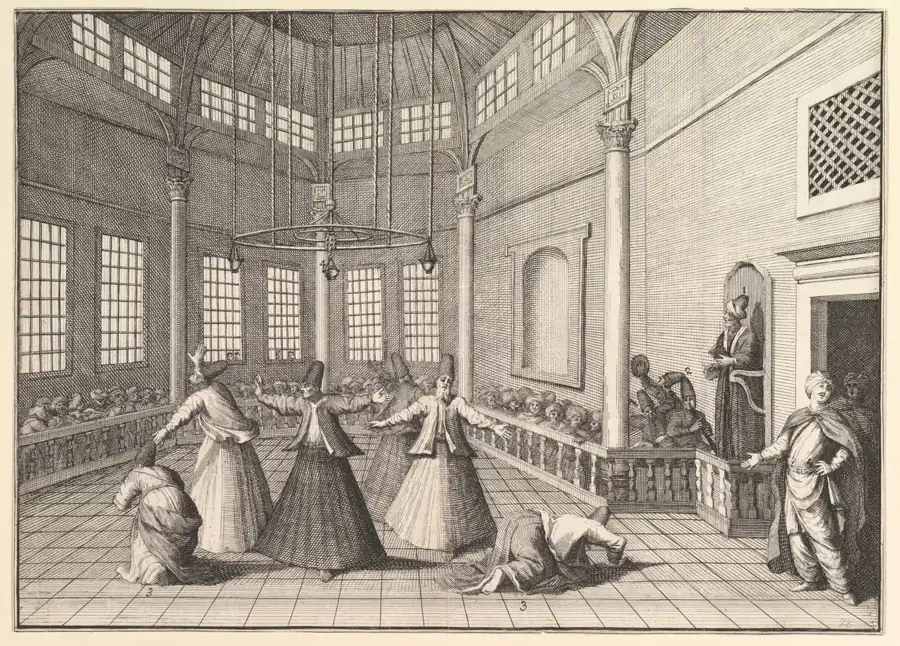
Reading a historical image of the sema

Reading a historical image of the sema
The Metropolitan Museum of Art · William Hogarth
Public Domain / CC0 · Source · License
Images were resized and converted to WebP; not cropped.

William Hogarth’s print of 1723–1724 draws on earlier representations. It is an interpretation shaped by artistic choices, rather than an unchanged record of a ceremony. Read Mevlevi culture through its music, education and spaces as well as its ritual movement.

This page is the international reading edition. You can also read the detailed Turkish original. Turkish original

This page is the international reading edition. You can also read the detailed Turkish original. Turkish original

A living tradition

The Mevlevi tradition developed around Rumi’s legacy. Sema is more than the physical act of turning: music, training and etiquette contribute to its meaning. Appreciating the ceremony in its context is part of respecting this cultural heritage.

The UNESCO dates

The Mevlevi Sema Ceremony was proclaimed a UNESCO Masterpiece in 2005 and inscribed on the Representative List of the Intangible Cultural Heritage of Humanity in 2008. Check current announcements from the organizer for event times and audience rules.

Continue exploring

Sources